
 etraveladmin
 Are you planning a trip to Death Valley? Prepare yourself! Outside of Alaska, Death Valley is the largest national park in the United States. It is the hottest and driest place in North America, with Badwater Basin being the lowest point. Whew, Death Valley National Park is packed with activities, but that’s not all! Death Valley National Park, located in both California and Nevada, was established in 1994 after five decades as Death Valley National Monument. In 2013, it was appropriately designated as a Dark Sky Preserve.
It is without a doubt one of the most memorable places to visit for its unique scenery. As an added bonus, there are numerous amazing things to do.
Top Attractions in Death Valley National Park
1. Mesquite Flat Sand Dunes
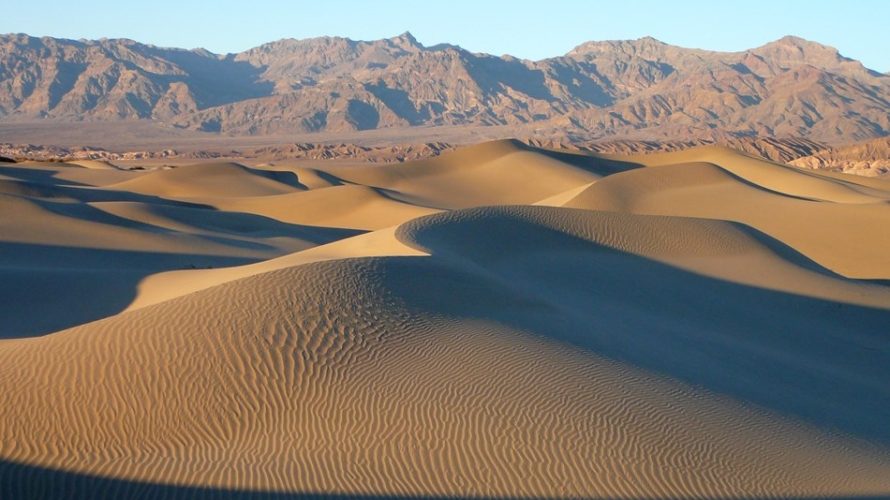
Sandboarding at Mesquite Flat Sand Dunes is easily one of the best things to do in Death Valley National Park. Mesquite Flat Sand Dunes are Death Valley’s most popular and easily accessible sand dunes, with some dunes towering 100 feet above the valley floor. Even if you don’t want to go sandboarding, the Mesquite Flat Sand Dunes are a great place to let loose and run down the sandy slopes.
Mesquite Sand Dunes are easily accessible from the 190, and there is a reasonably large parking lot just off the road. We recommend arriving early so that the sand dunes are still cool underfoot. There are no sandboarding rentals in the park, so you must bring your own.
2. Artist’s Color Palette
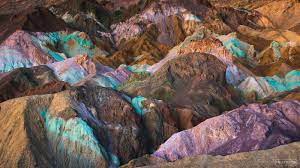
Artist’s Palette is a stunning viewpoint that overlooks a cluster of pastel-colored hills. After millions of years of oxidation and weathering, the hills developed their distinctive colour, and visitors now flock to see the phenomenon. The ‘Artist’s Palette’ viewpoint gets its name from the colour combination.
Artist’s Palette is located just off Badwater Road on the Artist’s Drive loop. If you don’t have much time, there’s a short trail that leads from the parking lot and restrooms to the viewpoint. The attraction is located on the 9-mile Artist’s Drive loop, which is an attraction in and of itself. Allow extra time to enjoy driving Artist’s Drive at your leisure.
3. Natural Span
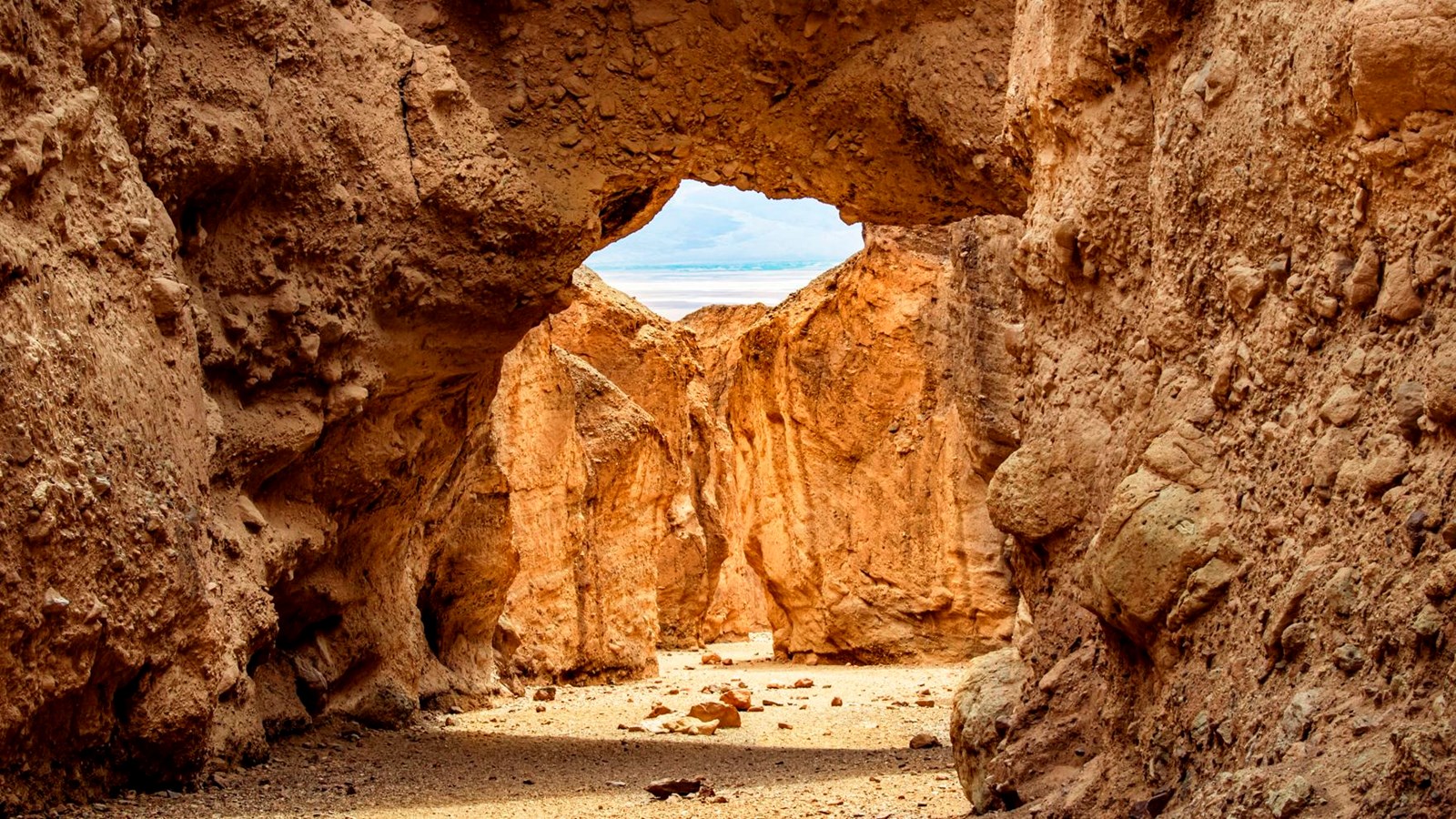
If you can’t make it to Arches National Park’s sandstone arches, Natural Bridge is a vast, jagged arch that towers 35 feet above the canyon floor. Natural Bridge was formed over thousands of years by a rare series of flash floods. Hiking to the bridge allows visitors to walk beneath it and admire the geological formation in all its glory. One of the most impressive things to do in Death Valley is to visit Natural Bridge.
Natural Bridge requires a hike, but it is only a 2-mile round trip. If you don’t want to walk long distances in the heat, are in a hurry, or are travelling with a family, this is the hike for you. On the way back, you get a beautiful view of the salt flats, which is sure to lift your spirits.
A dirt road off Badwater Road leads to the Natural Bridge Trailhead. There is plenty of parking at the end, but the dirt road conditions can be rough. Before you attempt it, check the road conditions on the National Park Service website. Because of the possibility of deep potholes, it is best suited to 4WD.
4. The Devil’s Golf Course
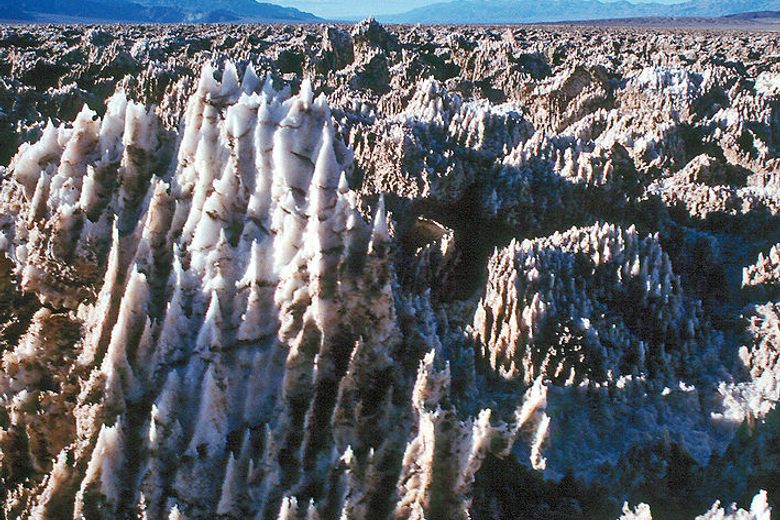
The name Devil’s Golf Course may have you scratching your head as to what it could be. The draw is a salt pan, but the floor is so jagged and uneven that an old National Park Service guidebook joked that “only the Devil could play golf there.” The salt pan floor is very different from its smooth salt flat neighbour Badwater Basin (which we’ll look at in more detail later), and there are numerous stalagmites. Some salt spikes are two feet tall, so you’ll be walking around a boardwalk rather than across the salt pan itself.
The Devil’s Golf Course was once covered by a lake, which evaporated and left a thick layer of salt and minerals behind, resulting in the natural phenomenon you see today. We strongly advise bringing a camera to this attraction, as it is without a doubt one of the most stunning things to do in Death Valley.
6. Golden Canyon
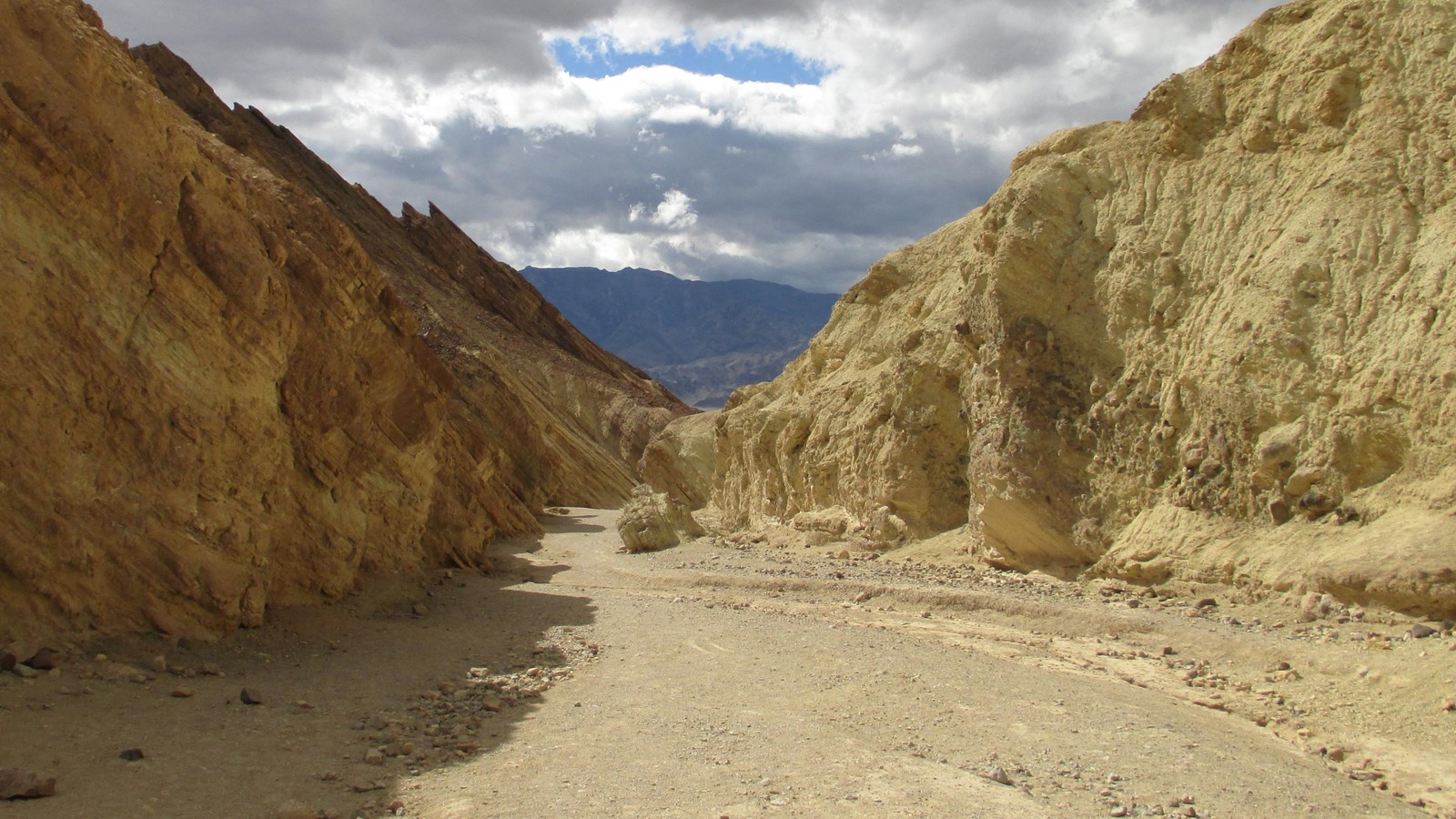
Are you ready for an amazing hike? The Golden Canyon Trail is a beautiful hike through a honey-colored ravine on a well-marked trail. Golden Canyon’s good looks have drawn the attention of Star Wars movie producers, so bring your camera.
The 2-mile round-trip trail includes a short 3-foot rock scramble. The scramble is untechnical and suitable for anyone with good fitness and reliable footwear, so the hike in Death Valley National Park is simple to complete. Most hikers end at Red Cathedral, but you can go further if you want a more difficult challenge.
7. The Badwater Basin
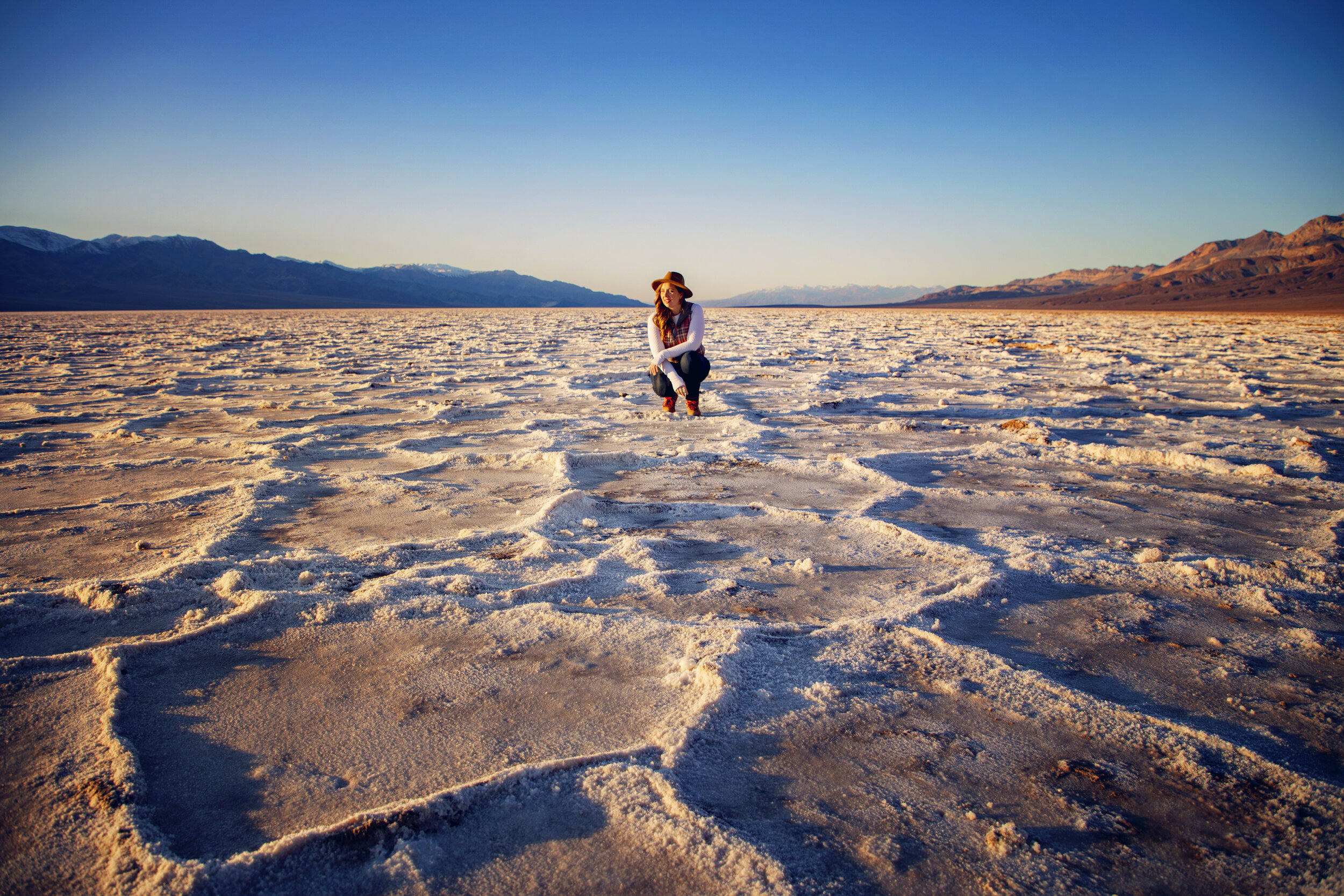
One of the most fascinating things to do in Death Valley is to visit Badwater Basin. At 282 feet below sea level, Badwater Basin is the lowest point in North America. Badwater Basin has around 200 square miles of salt flats to explore, making it the world’s largest protected salt flats.
When it rains, the water reflects off the salt crystals, making Badwater Basin appear mirror-like. When dry, Badwater Basin resembles snow, and the salt flats are arranged in small circular patterns along the valley floor.
A short trail off Badwater Road leads to Badwater Basin. Near the trailhead, there is a restroom and parking area. The Devil’s Golf Course and Dante’s View are both very close to Badwater Basin. If you’re driving down Badwater Road to get to Badwater Basin, consider combining these three attractions.
8. Scotty’s Mansion
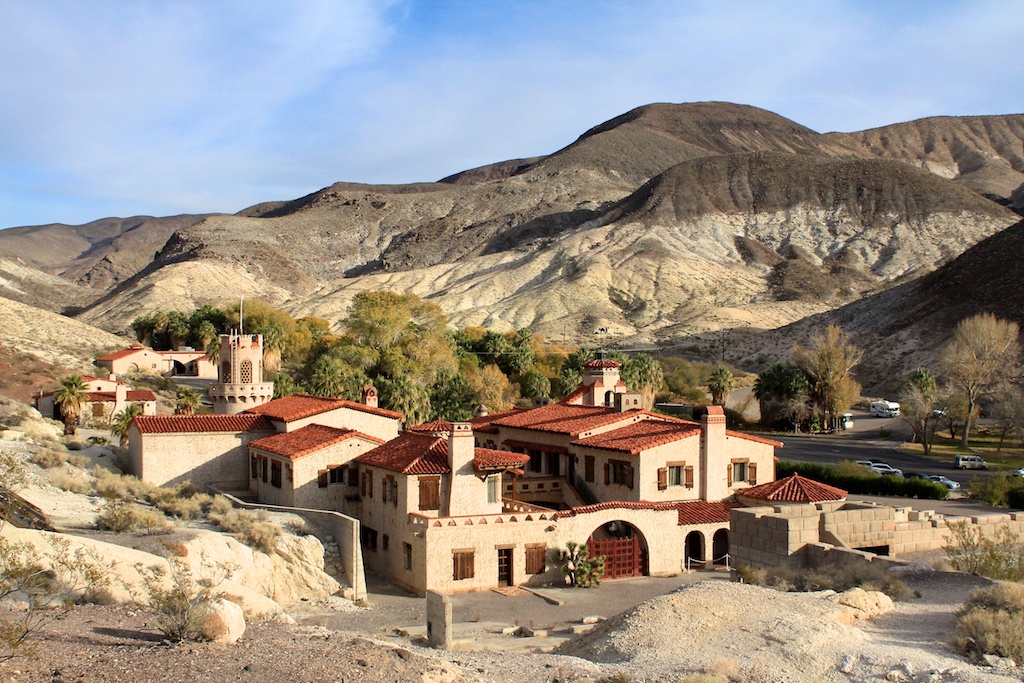
Scotty’s Castle demonstrates that Death Valley is more than just geology and hiking trails. The ‘castle’ is more of a mansion than a castle, and its story is a mix of history and local culture. Visitors can book guided tours of the building today to learn more about the history, but we’ll give you a quick rundown here.
Albert Mussey Johnson built the mansion for himself and his wife to use as a luxurious vacation home. Walter Scott, on the other hand, boldly convinced the community that he had built it by making money through secret mines in Death Valley. Scotty’s Castle was named after the mansion, and a cloud of mystery surrounding the mansion’s “true story” is kept alive by the mansion.
In any case, touring the mansion transports visitors back to the roaring 20s and 30s. You can admire the extensive woodwork furnishings and details, but you can also see the impact of the 2015 floods, which severely damaged the house in some areas.
9. Ghost Town of Rhyolite
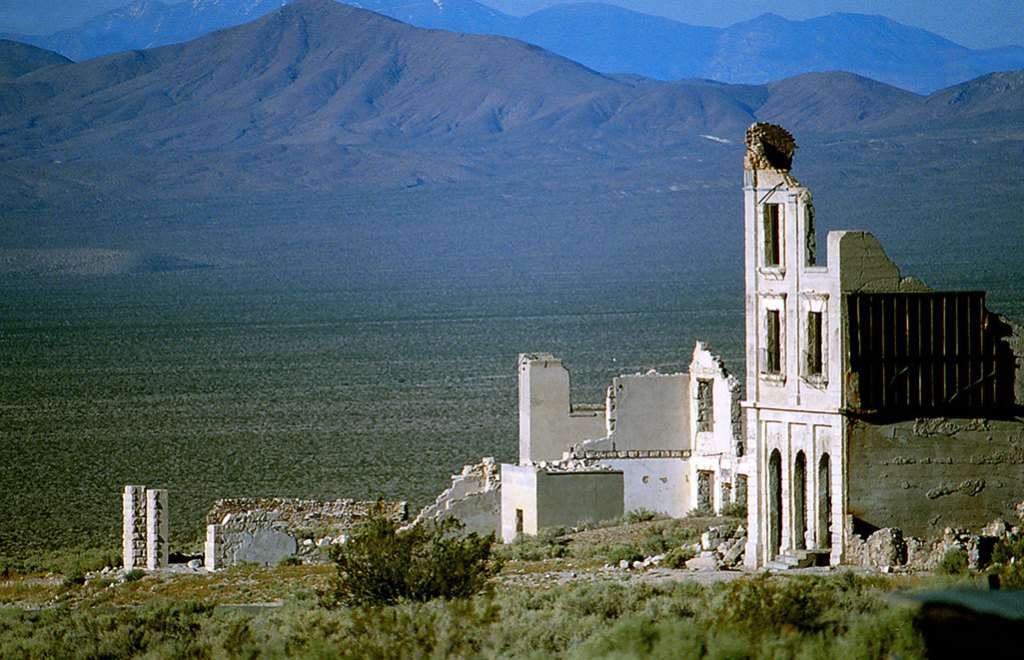
Rhyolite Ghost Town is on the outskirts of Death Valley, on the park’s eastern side, across the Nevada border. Rhyolite is an old, abandoned mining town, and the town’s light and power were turned off in 1916 due to mine and bank closures. However, there is still so much to discover nowadays.
The old bank, the train depot, and Tom Kelly’s Bottle House are all (almost) still standing. It’s also worth visiting Goldwell Open Air Museum, which has an outdoor sculpture garden. Rhyolite is ideal for those who enjoy history and visiting abandoned places.
Rhyolite Ghost Town is about an hour’s drive from Furnace Creek. We recommend breaking up the drive by stopping at Hell’s Gate along the way. Hells Gate is a scenic stop where you can admire the stunning scenery of Daylight Pass Road and visit the Death Valley National Park Information Area.
10. The Eureka Dunes
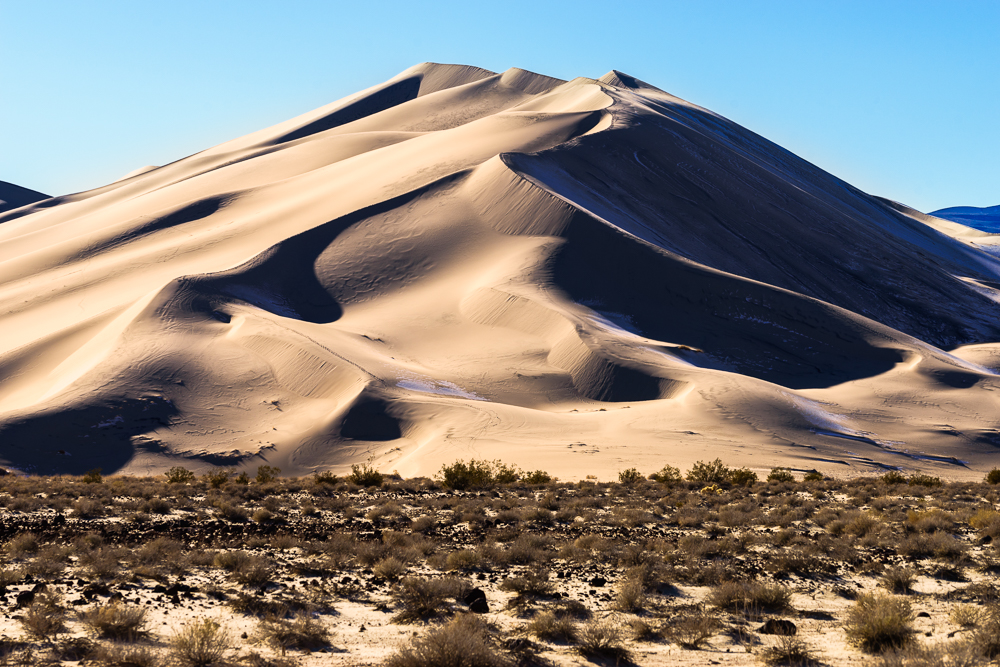
The Eureka Dunes are an excellent addition to your itinerary. In a nutshell, the dunes are massive. They are the tallest in California, and some argue they are the tallest in North America. Some dunes reach heights of over 680 feet; however, don’t get too excited about sandboarding. To protect sensitive flora, the Eureka Dunes are closed to sandboarding, sand skiing, and sledding. Who is to blame but the National Park Service? The Eureka Dunes are one of the most spectacular natural attractions in the United States.
Even if you can’t participate in sand sports, you can still hike the dunes. While doing so, keep an ear out for the’singing sand.’ Something about the sand grains moving together creates a lovely sound, similar to an organ bass note. Keep an eye out for desert flora as well, as the dunes are teeming with plant life such as Eureka Dunes Evening Primrose and Shining Milkvetch.